Investment case · Portfolio model

A U.S. mineral-claims platform, advanced in order and disclosed with care.

Triple 8 Mines is a private, pre-revenue company. It acquires and develops lode and placer claims across the United States, holds two assets today, and advances each claim group in stages, with a decision at the end of each one. Each step is subject to technical results, financing and regulatory review.

Company at a glance

Two U.S. assets, one technical pathway

An economic interest in gold from placer claims in Nevada, and lode claims being staked in California, each advancing toward an S-K 1300 Technical Report Summary.

Formed in Wyoming as a C-corporation. Private and pre-revenue.
June 2026
Placer claims owned in Nevada, with a capped share of any gold produced from the 49-claim AMI operation
4
Lode claims being staked in Mariposa County, California (the Buckingham claims), not yet of record
up to 86
Working target for the AMI S-K 1300 technical report
Feb/Mar 2027

Where each asset stands

AMI · Glendale, Clark County, Nevada · placer gold

What Triple 8 holds
Owns 4 of the 49 placer claims (AMI 05–08). Contractual right to about 10.4% of the gold produced from all 49 claims, up to a cap, less Anything Media’s 50% net-profits royalty (about 5.2% net). Does not own or operate the other 45.
Status today
Agreement signed BLM transfer filing in progress S-K 1300 Stage 1 underway
Next milestone
S-K 1300 report, working target February/March 2027

Buckingham · Mariposa County, California · lode

What Triple 8 holds
Being staked: up to 86 lode claims (the final count may be lower), to be held 100% through the subsidiary 999 Mines, LLC once recorded. Not yet of record.
Status today
Staking underway
Next milestone
Recording targeted for early November 2026, then an exploratory S-K 1300 report, subject to funding

Claims the company owns, contractual rights to production, and claims still being staked are different things, and the company reports them separately. No mineral resources or reserves have been disclosed for either asset.

How the model is intended to create value

  1. Partner with owners. Many owners hold claims they cannot fund the technical work on themselves, so claims can often be staked, optioned or acquired on terms that work for both sides.
  2. Prove what is there. Independent Qualified Persons test the claims to SEC S-K 1300 standards. A signed report turns an undocumented claim into a property that investors, partners and lenders can evaluate, or shows at limited cost that it should be dropped. For scale, the company’s planned exploratory report on Buckingham is estimated at about $250,000, and the AMI program at $600,000–$989,000.
  3. Turn it into value. Where the results support it, a claim group can be taken toward production by the company, brought into a joint venture with an operating partner, sold, or retained as a royalty.
  4. Let capital follow results. Each step has a budget and a decision point, so spending grows only as the evidence does, and growth is measured per share, not per claim.

This describes how the business model is intended to work. It is not a forecast, and any claim group may stop at any stage.

Why consider the company before its first technical report

Investing now means investing before either asset has an S-K 1300 report. That is the main risk. The first technical program, on AMI, is funded by Anything Media, which has funded Stage 1 and decides on each later stage, and the company repays that cost, up to a cap, only if it keeps its claims afterwards. Spending on every claim group is staged, so capital moves to the next step only when results support it. Ownership after the offering, and what the founders paid, are set out below. The first tests are dated: Buckingham of record in early November 2026, and the AMI report targeted for February/March 2027. None of this predicts results, and both assets could disappoint.

What the capital is for

The intended uses of this offering, the terms and ownership after the offering are summarized in Terms, ownership and use of proceeds below. Claim groups whose reports support it would need further studies, permits and capital before any development or production. A potential Nasdaq listing is the planned route to liquidity for shareholders; it is not assured.

Forward-looking statements

This page describes plans and intentions, including claim acquisitions, staking, technical studies, possible development and production, reporting-company status and a potential Nasdaq listing. These are forward-looking statements. They are subject to risks and uncertainties, including technical results, title, permitting, financing, market conditions and regulatory review, and actual outcomes may differ materially. Nothing on this page is an offer to sell or a solicitation of an offer to buy any security. See Disclosures & Risk Factors.

The offering

Terms, ownership and use of proceeds

A summary of Private Placement Memorandum No. 003. The memorandum governs if anything here differs, and it contains the full risk factors.

Offering at a glance

Security
Series I Convertible Preferred Stock, stated value $75.00 per share
Conversion
Each share converts into 100 shares of common stock (equal to $0.75 per common share), at the holder’s option and automatically on a public listing
Size
Up to 20,000 shares ($1,500,000). No minimum raise; the company may close on any amount subscribed
Minimum investment
1,334 shares ($100,050)
Rights
On liquidation, $75.00 per share before any distribution to the Series F Preferred or common stock. No preferential dividend. No voting rights except as required by law
Who may invest
Accredited investors only, under Rule 506(c), with status verified through VerifyInvestor.com before funds are accepted
Opens
October 26, 2026
Liquidity
Restricted securities. There is no public market and none may develop; a listing is not assured. Plan to hold for an indefinite period

Ownership after the offering

HolderAs commonFully diluted
Aurum Capital Corporation (controlled by John Shebanow) · 44,442 Series F4,444,200~36%
Launchpad Ventures, LLC (held one-half for Ron Ause, one-half for Colleen Goodson Manley) · 34,877 Series F3,487,700~28%
Cello Limited Partnership (Ron Ause) · 13,998 Series F1,399,800~11%
DEBOSS Limited Partnership (Lurry Lacour) · 6,683 Series F668,300~5%
Series I investors, if fully sold · 20,000 Series I2,000,000~16%
Wayne Mayer note, on conversion (estimate)~245,000~2%
Total~12,245,000100%

What the founders pay. The Series F founder shares are to be issued after the Article V amendment is filed, for their par value ($0.001 per share, about $100 in total) and organizational services, except 10,756 of Aurum’s shares, which are the share consideration for the AMI assignment. As converted, that is a small fraction of a cent per common share, against $0.75 for investors. Each Series F share carries 100 votes, so the founders hold voting control while Series I is outstanding.

Officer pay. No officer or director currently receives a salary or other compensation. Any future compensation would be approved by directors without an interest in it and disclosed.

An equity incentive pool or listing reserve, not yet sized, and any future financing would dilute these percentages. Percentages are rounded.

Intended use of proceeds, at the maximum raise

UseApproximate amount
Buckingham exploratory S-K 1300 report (exploration results, not a resource or reserve)~$250,000
Possible acquisition of additional placer claims: owner payment, only if an agreement is signed~$100,000
Possible acquisition: exploratory S-K 1300 report, only if an agreement is signed~$250,000
Listing preparation: legal and accounting work (a listing is not assured)~$150,000
Full S-K 1300 report with drilling on one property, only if proceeds are sufficient and results support it~$700,000
Working capital and general corporate purposes~$50,000

If less is raised, the Buckingham report and listing preparation are funded first. The AMI technical program is paid for by Anything Media and is not funded by this raise; if Triple 8 keeps its AMI claims after the report, it must repay that cost, up to $1,250,000, which could require a material part of the company’s available capital. Buckingham staking was funded by the convertible note. These proceeds will not fund drilling on more than one property or complete a listing, and additional capital will be needed.

Amounts are estimates, not commitments; the board may reallocate them. The private placement memorandum governs.

Industry primer

How small-scale gold mining works

Most investors know gold as a price on a screen, not as a business. This is plain-language background on how a gold project moves from a mining claim to production, where the money and the risk sit, and what has changed in recent years. It does not describe the expected results of any Triple 8 property.

The short version

  • A claim is not proof. A mining claim is a right to explore and develop minerals on a piece of ground. It is not proof that gold is there in a quantity that can be mined at a profit.
  • Value is built step by step. Sampling, drilling, testing and, eventually, a technical report signed by a Qualified Person. Each step can confirm or end a project. Most exploration projects never reach production.
  • The math is simple; the inputs are not. A mine’s result is roughly the ounces it recovers times the gold price, minus the cost of moving and processing rock, permits, reclamation, royalties and overhead. Grade, recovery and scale matter as much as price.
  • Price and costs both moved. The price of gold has risen sharply since 2020, driven in part by historically high central-bank buying. Mining costs have risen too, and prices can fall as fast as they rose.
  • Better tools, faster permits, no guarantees. Better tools now make finding and testing ground cheaper and faster, and federal policy has moved to speed up mineral permitting. Neither puts gold in the ground or guarantees a permit.
  • The small-claim gap. U.S. production is concentrated in a small number of large mines. Many smaller claims are held by individuals and families who lack the capital and expertise to advance them. That gap is what Triple 8 is organized to address.

From claim to production

Every gold project follows roughly the same path. A project can stop at any stage, and each stage costs more than the one before it.

StageWhat happensMain risk
1. AcquireStake new claims, or buy, option or partner on existing ones. Title and maintenance history are checked.Title defects; lapsed fees
2. ExploreMapping, surface sampling, geophysics and review of any historical work.Nothing worth pursuing is found
3. Drill and testDrilling (lode) or test pits and bulk samples (placer); assays and metallurgical tests.Grades too low or too erratic
4. Technical reportA Qualified Person evaluates the data under the SEC’s S-K 1300 rules.No resource can be stated
5. Permit and financeEnvironmental review, operating permits, water rights and a reclamation bond; raising capital to build.Delays, litigation, dilution
6. Build and produceEquipment, a processing plant and site works; mining and recovery begin.Cost overruns; lower recovery than tested
7. Reclaim and closeDisturbed ground is reclaimed to the standard the permits require.Liabilities that outlast production

Under S-K 1300, a company may not disclose mineral resources or reserves unless a Qualified Person has prepared a technical report summary that supports them. A company with no mineral reserves, like Triple 8 today, is an exploration-stage issuer. S-K 1300 explained

Placer

Loose gold in sand and gravel

Moved and concentrated by water over time. Gravel is excavated and washed, and gold is recovered by gravity. It can start smaller, with mobile equipment. The key questions are gravel volume, grade, water supply and depth to bedrock.

Triple 8: four of the 49 AMI placer claims, Glendale, Clark County, Nevada

Lode

Gold locked in solid rock

Usually in veins or zones with quartz and sulfides. Rock is drilled, blasted and crushed, and gold is recovered by gravity, flotation or leaching. It usually needs more capital, a mill and longer study. The key questions are vein width and continuity, grade at depth and metallurgy.

Triple 8: up to 86 Buckingham lode claims being staked, Mariposa County, California

Where the money goes

At its simplest, a mine earns the ounces it recovers multiplied by the price it sells them at. Against that it pays to move material (excavation, hauling, fuel and equipment), process it (crushing, washing and recovery, plus water and power), stay in business (labor, maintenance, sustaining capital, insurance and overhead) and meet its obligations (royalties, claim fees, permits, monitoring, reclamation and bonding).

Three technical factors usually decide whether a deposit can be mined at a profit: grade (how much gold per ton), recovery (how much of it the process actually captures) and scale (how much material can be moved and processed each day). A high gold price helps, but it does not rescue a deposit that is too small, too low in grade or too hard to process.

For context, the World Gold Council reports that the industry’s average all-in sustaining cost (AISC), a standard measure of the cost to keep producing an ounce, was about $1,785 per ounce in the first quarter of 2026, up 16% year on year. That average comes mostly from large producers. Costs at any single mine can be much higher or lower, and it is not an estimate for any Triple 8 property.

What has changed

YearAverage gold price (US$ per troy ounce, LBMA)
2020$1,770
2022$1,800
2023$1,941
2024$2,386
2025$3,432

Annual averages. Past prices do not predict future prices. Gold has had long periods of falling or flat prices, and a mine planned at today’s price may operate at a lower one.

  • Who is buying. The World Gold Council reports net central-bank purchases of more than 1,000 tonnes in each of 2022, 2023 and 2024 and 863 tonnes in 2025, against an average of 473 tonnes a year from 2010 to 2021. Demand of this kind can slow or reverse.
  • Supply and costs. World mine production was about 3,672 tonnes in 2025, at or near a record. New large discoveries have become harder to find, and costs have risen with labor, energy, royalties and equipment, so a higher price has not flowed through to producers in full.
  • Technology. Drone and satellite surveys, lidar mapping, portable assay instruments, smaller and more accurate drill rigs, and modular gravity-recovery plants with water recycling make it cheaper to learn what a claim holds. Technology improves the odds of making good decisions early. It does not change what is in the ground.
  • Permitting and policy. On federal land, exploration that disturbs less than five acres generally needs a notice to the Bureau of Land Management; larger work needs an approved plan of operations, and either requires a reclamation bond before work starts. In March 2025, Executive Order 14241 directed federal agencies to expedite mineral production projects, including gold. How much faster permits actually become remains to be seen, especially in states such as California, where SMARA and CEQA reviews also apply.
  • The small-claim gap. The U.S. Geological Survey estimates the United States produced about 160 tonnes of gold in 2025, mostly from Nevada and Alaska, with the top 25 operations producing about 94% of it. Alongside those mines sit many smaller claims, often held by families who keep them in good standing but cannot fund the work needed to show what they hold.

Why small projects fail

An honest picture includes the reasons most projects never become mines: the gold is not there in sufficient grade, volume or continuity, or cannot be recovered economically; testing costs more or takes longer than planned and the money runs out; permits are delayed, conditioned, denied or challenged, or water is unavailable; costs rise or the gold price falls between planning and production; title problems or missed fees undermine the claims; raising capital dilutes existing owners or is not available; and reclamation obligations outlast production. These risks apply to every exploration-stage company, including Triple 8. Key risks

Information as of October 23, 2026. Sources: LBMA annual average gold prices via MetalCharts; World Gold Council, Gold Demand Trends Full Year 2025 and “Record gold prices outpace rising mining costs in Q1’26” (August 2026); U.S. Geological Survey, Mineral Commodity Summaries 2026: Gold; Bureau of Land Management, 43 CFR 3809; Executive Order 14241 (March 2025); SEC Regulation S-K, subpart 1300. Third-party data have not been independently verified. This is general industry information, not an offer to sell or a solicitation of an offer to buy any security. Any offer is made only to verified accredited investors through the company’s private placement memorandum and subscription documents, which govern. An investment in the company is highly speculative and involves substantial risk of loss, including the loss of the entire investment.
Market backdrop

Why gold, why the United States

States with claims today: Nevada (AMI) and California (Buckingham)
2
  • U.S.-only portfolio. The company acquires claims only in the United States, where expropriation risk is minimal. Federal and state rules, permits and claim-maintenance requirements still apply and can change, and each state’s rules are reviewed before the company acquires there.
  • Two states, two permitting climates. Nevada, home of the AMI position, ranked first of 68 jurisdictions on the Fraser Institute Investment Attractiveness Index in its 2025 survey. California, home of the Buckingham claims, has ranked well below Nevada in recent surveys, reflecting longer permitting timelines under SMARA and CEQA. The company’s plans for Buckingham allow for those timelines.
  • Technical reports. An S-K 1300 Technical Report Summary is the SEC standard for disclosing mineral properties. It is required for the planned listing.

Sources: Fraser Institute Annual Survey of Mining Companies 2025, published February 2026, as reported by Mining Weekly and the Nevada Governor’s Office of Economic Development. A jurisdiction ranking does not indicate mineralization on any claim, and rankings change from year to year.

Strategy

A platform for U.S. mineral claims

Triple 8 acquires and develops mining claims of every type, lode, placer and more, anywhere in the United States. It intends to build a large portfolio, take claim groups toward production where the results support it, and give owners of undeveloped claims a path to sell or partner.

Acquire

Lode and placer claims across the U.S., by staking, assignment, purchase or partnership with their owners.

Advance

Qualified Person–led work to S-K 1300 Technical Report Summaries.

Develop

Where the results support it, take claim groups toward production, by the company or with operating partners. Development pathway

Realize

Turn claim groups that prove out into value: production, a joint venture, a sale or a retained royalty. A potential Nasdaq listing is the planned route to liquidity for shareholders; it is not assured.

How each claim group moves from review to technical reporting is set out on the Approach page.

Assets

What the company holds today

Asset 1 · Glendale, Clark County, Nevada

AMI placer position

Triple 8 owns four of the 49 AMI placer claims at Glendale, Nevada (AMI 05–08), assigned to it by Aurum Capital (BLM transfer filing in progress), and does not own the other 45. The 49 claims are to be mined as one operation, and Triple 8’s net share works out to about 5.2% of the gold produced from all 49 claims, up to a cap. How the share works.

Technical program
Anything Media, Inc. (“AMI”) has engaged Arowe for a phased program to an S-K 1300 Technical Report Summary with an Initial Assessment and mineral resource estimate. Stage 1 of 5 (sampling and permitting) is underway under an independent Qualified Person.
Program cost
Approximately $600K–$989K, funded by Anything Media stage by stage (Stage 1 funded; later stages at its discretion) and repaid by the company, up to a cap, only if it keeps the claims after the report.
Working target
February/March 2027
AMI placer position

Asset 2 · Mariposa County, California

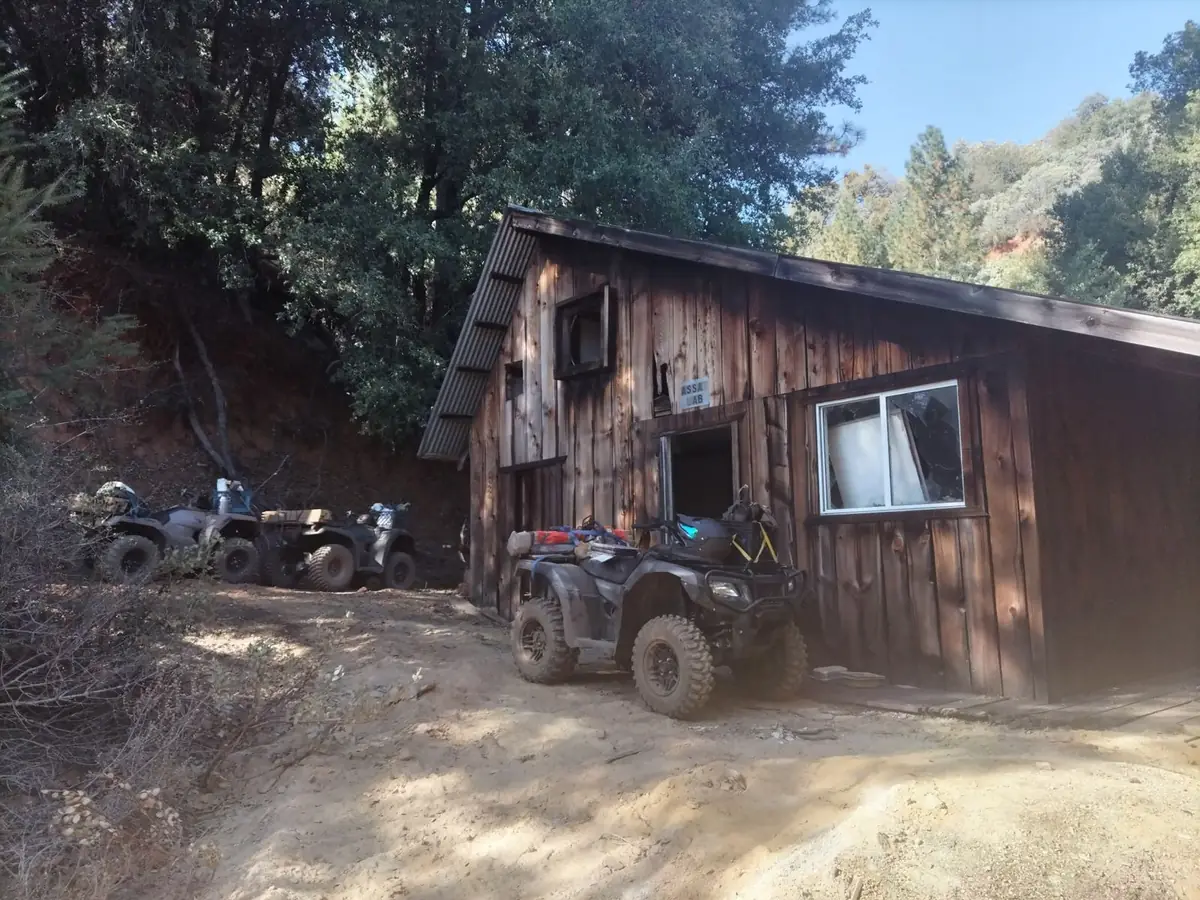
Buckingham lode claims

Advanced Geologic is staking up to 86 unpatented lode claims, located as Buckingham 1–86 by 999 Mines, LLC, a wholly owned subsidiary of Triple 8, so the company will hold 100% of the claims once they are of record. The deposit has been paid. An exploratory S-K 1300 report is planned, subject to funding; it has not yet been contracted. The of-record filing target is early November 2026.

Historical data
An exploratory S-K 1300 report will test the historical data package against current standards. Historical reports do not establish mineralization on the claims.
Technical plan
An exploratory S-K 1300 report is planned, with a path to full resource drilling once additional capital is available.
Buckingham lode claims

AMI economics, in plain terms

How Triple 8’s share of AMI gold works

The AMI agreement is the company’s most significant asset today. This is a plain-language summary; the agreement governs. No gold has yet been defined or produced at Glendale.

  1. One operation across 49 claims

    The 49 placer claims are to be mined as a single operation, rotating across the package (a “round-robin” plan), not claim by claim. Triple 8’s four claims (AMI 05–08) receive an allocated share of the gold produced anywhere in the 49-claim package.

  2. About 10.4% allocated, to a cap

    The four claims are allocated about 10.4% of any gold produced from the 49 claims, up to a cap set by the measured and indicated resources in the S-K 1300 report. Inferred resources do not count toward the cap.

  3. About 5.2% net to Triple 8

    Anything Media holds a 50% net-profits royalty on that allocated share, paid once operating and start-up costs are recovered. On a net basis, Triple 8’s share works out to about 5.2% of the gold produced from the 49 claims.

Read this first

What sets the cap, and why it may be zero

The cap is set by the measured and indicated resources in the AMI S-K 1300 report; inferred resources do not count. The current program is designed to support, at most, an inferred resource, so even a successful first report may leave the cap undefined or at zero, and further work would be needed before Triple 8’s share has value. The 10.4% and 5.2% figures describe how any production would be shared. They are not an estimate of the quantity or value of any gold, and no gold has been defined at Glendale.

A production-linked interest
Triple 8’s share is paid from gold produced, so AMI is the company’s first interest tied directly to production. Whether and when production occurs depends on Anything Media’s operation and on the S-K 1300 results.
Why the structure matters
Because production is shared across the whole package, Triple 8’s result does not depend only on the gold beneath its own four claims. It depends on what the 49-claim operation, about 770.6 acres of record, produces. That spreads geological risk across the package.
What it does not do
It does not give Triple 8 control of the operation, which Anything Media runs. It does not guarantee that mining will take place. Triple 8’s share is capped.
Cost of the technical report
Anything Media has funded Stage 1 of the S-K 1300 program and authorizes each later stage at its discretion. If Triple 8 keeps its claims after the report, it repays that cost, up to $1.25 million; if the report does not support a mine, it can return the claims instead.

Summary of the October 13, 2026 Mining Claim Purchase Agreement between Anything Media, Inc. and Aurum Capital Corporation, as assigned to Triple 8 and including the parties’ agreed round-robin mining plan. The assignment is a related-party transaction (see Governance). The full terms are available to prospective investors on request. No mineral resource or reserve has been disclosed, and these percentages are not an estimate of the quantity or value of any gold.

Milestones

The planned path toward a potential listing

Six steps, from completing the Buckingham staking to a listing application. Timing is a target, not a guarantee.

  1. Early Nov 2026

    Buckingham staking complete and of record.

    In progress
  2. Planned

    Exploratory S-K 1300 report on Buckingham.

    Planned
  3. Feb/Mar 2027

    AMI S-K 1300 technical report delivered (Arowe program).

    Stage 1 of 5 underway
  4. Parallel

    PCAOB-registered auditor selected. Securities counsel engaged.

    Underway
  5. Pre-listing

    Meet the exchange’s requirements for publicly held shares and shareholders.

    Planned
  6. Listing

    File an S-1 registration statement and a Nasdaq listing application.

    Planned

Timing is a target, not a guarantee. Each step depends on technical results, financing, audits and regulatory review, and a listing may not occur.

The case in depth

Supporting detail

Open a section for the supporting detail.

Portfolio strategyAcquire across claim types and states, then put capital where results support it.

Many early-stage mining companies depend on one property. If that property disappoints, the company has little left. Triple 8 is built the other way. It intends to hold many claim groups, of more than one claim type and in more than one state, and to advance only those whose results support further spending.

  • Sourcing. New ground is staked where land is open to mineral entry. Existing claims are acquired from holders who are not developing them, by purchase, option, assignment, joint venture or a sale with a retained royalty.
  • Screening. Each claim group is reviewed for geology, access, land status, title and permitting path before the company commits. Most are expected to be declined.
  • Allocation. Claim groups compete for the same capital. Those that do not advance may be held at low cost, dropped, sold or partnered.
  • Claim owners as a source. The company works directly with individuals and companies that hold undeveloped claims. Any acquisition is subject to due diligence and a definitive written agreement.

The pathway each claim group follows is set out on the Approach page.

Portfolio today

Two claim groups: an interest in the 49 AMI placer claims in Nevada, and up to 86 Buckingham lode claims being staked in California.

Full portfolio
Asset quality and jurisdictionsPlacer claims in Nevada and lode claims in California, under defined federal and state rules.

Nevada · AMI

A state with a large federal land base

  • The Bureau of Land Management manages about 48 million acres in Nevada, about 67% of the state.
  • Nevada was the leading gold-producing state in 2025, with about 64% of U.S. production, according to the U.S. Geological Survey. Most of that production comes from the large deposits of north-central Nevada; Clark County, where Glendale lies, is not a significant gold-producing district.
  • Exploration or mining that disturbs more than 5 acres in a year needs a state reclamation permit from the Nevada Division of Environmental Protection, in addition to any BLM filing.

AMI · Glendale, Clark County · economic interest in gold from 49 placer claims · about 770.6 acres of record (BLM)

Mariposa County, California · Buckingham claims

The southern end of the Mother Lode

  • Mariposa County lies at the southern end of California’s Mother Lode, where gold was recovered during the Gold Rush, first from stream beds and later from hard-rock mines.
  • When California’s original 27 counties were created in 1850, Mariposa was the largest by area.
  • Surface mining in California is governed by the Surface Mining and Reclamation Act of 1975, which requires an approved reclamation plan and financial assurance, usually through the county as lead agency.

Buckingham · Township 3 South, Ranges 19–20 East · acreage reported once the claims are recorded

Regional history

Regional history does not indicate mineralization on the claims in the company’s portfolio. Production elsewhere in Nevada or in the Mother Lode explains why these areas are explored. It is not evidence that the AMI or Buckingham claims contain gold or any other mineral in any quantity, and the company makes no such claim.

Claim maintenance, in plain terms

Unpatented claims on federal land are recorded with the county and filed with the BLM. Each claim then needs an annual maintenance fee paid to the BLM on or before September 1. The small-miner waiver is limited to claimants holding 10 or fewer claims nationwide, so the company expects to pay the fee on every claim it holds. A claim on which the fee is not paid on time is forfeited by operation of law.

Sources: BLM Nevada (blm.gov/nevada); U.S. Geological Survey, Mineral Commodity Summaries 2026, Gold; NDEP Bureau of Mining Regulation and Reclamation; California Department of Conservation (SMARA); BLM annual maintenance (blm.gov). Which permits apply to each claim group depends on land status and planned work, and will be confirmed with counsel and permitting advisers.

Technical pathwayExploration, then an S-K 1300 technical report summary signed by a qualified person.

Since 2021, SEC-registered mining companies have disclosed mineral properties under subpart 1300 of Regulation S-K (“S-K 1300”). The rules set what a company may say about its properties and what evidence must stand behind it. Triple 8 intends to follow them for every claim group before it reports any estimate.

  • Qualified person. Estimates must be supported by a dated, signed technical report summary from a qualified person, a mineral industry professional with at least five years of relevant experience who is a member in good standing of a recognized professional organization.
  • Resources and reserves. Mineral resources are classed as inferred, indicated or measured by increasing geological confidence. Mineral reserves are the part of indicated and measured resources shown to be economically mineable after modifying factors are applied.
  • Study levels. Resource disclosure requires at least an initial assessment. Reserves require a pre-feasibility or feasibility study, including an economic analysis.
  • Company stage. An exploration-stage issuer has no material property with disclosed reserves.

Triple 8 is at the exploration stage. It has not disclosed mineral resources or reserves on any property. On the AMI placer position, Anything Media has engaged Arowe for a phased program to an S-K 1300 Technical Report Summary with an Initial Assessment and mineral resource estimate, and Stage 1 of 5 is underway. The program is designed to support an Inferred mineral resource if drilling and sampling results allow; if they do not, the report will set out exploration results. An exploratory S-K 1300 report is planned on the Buckingham lode claims.

The six-step development pathway

CONFIDENCE & STUDY DEPTH TRIPLE 8 TODAY 01 · Exploration results Mapping, sampling, test pits, drilling No tonnage or grade estimate AMI · Arowe program, Stage 1 of 5 underway Buckingham · exploratory report planned 02 · Mineral resources Inferred · indicated · measured Basis: initial assessment Signed by a qualified person 03 · Mineral reserves Probable · proven Basis: pre-feasibility or feasibility Modifying factors · economic analysis
What an S-K 1300 report can establishSchematic · simplified
AMI
Phased program by Arowe, engaged by Anything Media. Stage 1 of 5, funded by Anything Media, underway, toward a resource-stage Technical Report Summary · under an independent Qualified Person · working target February/March 2027. Qualified Persons
Buckingham
Staking by Advanced Geologic, of-record target early November 2026. Exploratory S-K 1300 report planned, subject to funding; not yet contracted. Full resource drilling only once additional capital is available.

Technical work may not identify mineralization that supports resource or reserve disclosure. Detail is on the AMI and Buckingham pages.

Capital formation strategyA private placement first, then reporting-company readiness and Nasdaq preparation. Regulated digital securities are being evaluated as a later step.

Step 1 · Private placement

Rule 506(c), accredited investors only

The company expects to fund acquisitions, claim maintenance and near-term technical work with private capital. The company’s offering is made under Rule 506(c) of Regulation D. The offering materials are available to anyone who asks, but only accredited investors may invest, and each investor’s status is verified before the company accepts funds. Securities are offered only through the offering materials, not through this website.

Size, terms and timing are set out only in the offering documents

Step 2 · Reporting readiness

Building to public-company standards

Becoming an SEC reporting company requires work that the company plans to begin before any listing application.

  • Financial statements audited by a PCAOB-registered firm (Semple, Marchal & Cooper, LLP selected)
  • Internal control over financial reporting
  • Independent directors and an independent audit committee
  • S-K 1300 property disclosure for material properties

Step 3 · Listing preparation

Preparing for a potential Nasdaq listing

Nasdaq’s initial listing standards cover, among other things, a minimum bid price, stockholders’ equity or market value tests, the market value of publicly held shares, the number of round-lot holders, market makers, and corporate governance requirements including a majority-independent board and an independent audit committee. The company intends to prepare against these standards. A listing is not assured.

Target tier · Nasdaq Capital Market · timing not yet set

Not part of this offering

Other capital sources

The company may in future consider other regulated ways to raise capital. None is designed, decided or part of this offering. See Disclosures.

If the company uses its own securities as consideration for claim acquisitions, they would be issued only under an applicable exemption from registration and would dilute existing holders. Each step depends on technical results, market conditions and regulatory review. Timing is not guaranteed.

Governance and related-party transparencyHow the AMI economic interest was assigned, and how related-party matters are handled.

Triple 8’s economic interest in gold from the 49 AMI placer claims was assigned to it by Aurum Capital. The company owns four of those claims (AMI 05–08) under the October 2026 purchase agreement and assignments (BLM transfer filing in progress), and does not own the other 45. Aurum Capital is controlled by John Shebanow, the company’s Vice President of Acquisitions and a director, so the assignment is a related-party transaction; its terms are set out in the offering documents.

As the portfolio grows, the company intends to apply the same controls to every acquisition. Each one is subject to title review and a definitive written agreement, with board approval where required.

Directors with an interest in a transaction disclose it and do not take part in approving it. Securities counsel has been engaged and has reviewed the private placement memorandum.

AMI assignor
Aurum Capital
Interest
A capped share of gold from the 49 claims, net of Anything Media’s royalty (see AMI economics above)
Accounting
To be set in the company’s first audit. Because the assignment is between related parties, the auditor may record it at the assignor’s cost.
Relationship
Related party. Aurum Capital Corporation is controlled by John Shebanow, the company’s Vice President of Acquisitions and a director.
Consideration
$100,000 in cash ($50,000 paid to date) and 10,756 shares of Series F Convertible Preferred Stock, to be issued after the Article V amendment is filed. Other terms are set out in the offering documents.
Approval
Approved by the directors with no interest in Aurum (Ron Ause, Colleen Goodson Manley and Lurry Lacour) and ratified by the full board on October 22, 2026, with Mr. Shebanow’s interest disclosed.
Counsel review
Terms are set out in the offering documents, which securities counsel has reviewed

Investor questions

The questions investors ask first

What does Triple 8 own today?Four AMI placer claims in Nevada, and up to 86 lode claims being staked in California.

In Nevada, four of the 49 AMI placer claims at Glendale (AMI 05–08), with their share of gold from the 49 claims, which are to be mined as one operation. Triple 8 owns them under the October 2026 purchase agreement and signed assignments from Aurum Capital; the BLM transfer filing is in progress. In California, up to 86 Buckingham lode claims are being staked in Mariposa County by 999 Mines, LLC, a wholly owned subsidiary, with recording targeted for early November 2026.

Every AMI claim can be checked on the BLM’s public register. Until the transfer posts, the register shows the prior claimant of record. The serial numbers are on the AMI page.

Why is there no resource estimate?Because SEC rules allow one only from a signed S-K 1300 report.

A company may disclose mineral resources only on the basis of a technical report summary prepared by a qualified person under subpart 1300 of Regulation S-K. That work is underway on AMI, with a working target of February/March 2027, and planned on Buckingham, subject to funding. Until a report is signed, the company does not state ounces, grades or tonnages, including historical estimates. S-K 1300 explained.

Who can invest, and how is accredited status checked?Accredited investors only, verified before any investment is accepted.

Anyone may request the offering materials, but only accredited investors may invest. When you decide to subscribe, your accredited status is verified through VerifyInvestor.com before the company accepts funds. Verification typically uses documents such as tax returns or account statements, or a written confirmation from a registered broker-dealer, an SEC-registered investment adviser, a licensed attorney or a certified public accountant. It starts with a request for the offering materials.

Who pays for the technical work?On AMI, Anything Media funded Stage 1 and decides on each later stage. On Buckingham, the company, subject to funding.

Anything Media has funded Stage 1 of the AMI S-K 1300 program, estimated at $600K–$989K in total, and authorizes each later stage at its discretion. The company repays that cost, up to a cap, only if it keeps its claims after the report, and may return them if the report does not support a mine. An exploratory report on the Buckingham claims is planned, depends on funding and has not been contracted.

How could investors eventually sell their shares?Not easily today. A potential Nasdaq listing is the planned route, and it is not assured.

The company is private and there is no market for its shares, which are subject to transfer restrictions. It is preparing for a potential Nasdaq Capital Market listing, which would need audited financial statements, SEC registration, an independent board and compliance with the exchange’s listing standards. The timing and outcome are not assured.

How does the company decide which claims to pursue?Screening first, then a budget and a decision point for each claim group.

Each claim group is reviewed for geology, access, land status, title and permitting path before the company commits, and most are expected to be declined. Every group that goes ahead gets a defined scope, a budget and a decision point before more money is spent.

What happens to my information if I ask for materials?It is used only to respond to you.

Requests go to investor relations and are used only to reply and, if you subscribe, to verify accredited status. The company does not sell personal information. Site analytics run only if you accept them, and never record what you type into forms.

Risk summary

Key risks and how the company addresses them

An investment in an exploration-stage mineral company is speculative and may result in the loss of the entire investment. A mitigant reduces a risk. It does not remove it.
Key risks, what they mean, and mitigants
RiskWhat it meansMitigant
Early stagePre-revenue company. No mineral resource is claimed today.Phased S-K 1300 work led by Qualified Persons, starting with Stage 1 of 5, funded by Anything Media.
Technical outcomeTechnical reports may not define economic mineralization.Spending is staged, with a decision point at each report, so the company can stop, sell or partner a claim group before committing more capital. Both assets could still disappoint.
Listing timingA Nasdaq listing depends on audits, reports and approvals.A six-step milestone plan. A PCAOB-registered auditor has been selected; securities counsel has been engaged.
LiquidityShares are private and restricted until a listing, which may not occur.Meeting the exchange’s publicly held share and shareholder requirements is part of the planned listing path.
Commodity priceGold prices can fall, which would reduce the value of any future production and could make the claims uneconomic.Price risk cannot be removed. The company is not producing and does not hedge; spending is staged, so commitments can be slowed if prices fall.

Further risks

A portfolio model spreads some risks and adds others. The interest in AMI also depends on parties the company does not control.

Not a complete list

The full risk factors are set out in the disclosures and, for any offering, in the confidential offering documents. Disclosures & Risk Factors

AMI structure
Triple 8 owns four of the 49 AMI claims (AMI 05–08) and does not own the other 45. Its interest depends on gold being defined and mined, on the cap and Anything Media’s net-profits royalty, and on AMI, Anything Media and Arowe carrying out a technical program the company does not control.
Acquisition execution
The company may not find, negotiate or close acquisitions on acceptable terms, and acquired claim groups may not perform as expected.
Title
Claims may carry defects in location, recording or chain of title that review does not detect. Claims may be challenged or lost. Buckingham is not yet of record.
Claim maintenance
Holding many claims means many annual fees and filings. A missed payment or filing can result in forfeiture.
Multi-state regulation
Each state has its own claim, permitting and reclamation rules in addition to federal rules. Approvals may be delayed or refused.
Financing and dilution
The company will need additional capital, which may not be available on acceptable terms. New issuances would dilute existing holders.
Related parties
The AMI assignment came from Aurum Capital, controlled by a director and officer, and the Buckingham claims are held through 999 Mines, LLC, which three of the company’s officers and directors contributed to the company for no consideration. These related-party arrangements may involve conflicts of interest.
Key personnel
The company depends on a small team and on outside technical consultants it does not employ.
Regulation & tokens
Securities rules for digital assets are unsettled. Tokenization may prove impractical or unavailable.

Your next step

Go as far as you are ready to

Start by following the company, or ask for the offering materials. Accredited status is verified before any investment is accepted.

  1. Follow the company

    Email updates when the company publishes news: claims recorded, technical reports, governance steps.

    Thirty seconds · unsubscribe any time

    Get email updates
  2. Request the offering materials

    The cover letter, private placement memorandum, corporate presentation, subscription agreement and accredited investor questionnaire, emailed by investor relations.

    Two minutes · no commitment

    Request the materials
  3. Speak with the President

    A call with Ron Ause to ask anything about the company, its claims and its plans.

    Scheduled at your convenience

    Ask for a call
  4. Subscribe and verify

    Return the signed subscription agreement and questionnaire, and complete accredited investor verification. Funds are accepted only after verification.

    Verification through VerifyInvestor.com

    How investing works